
Galicia · Atlantic
Wild Octopus
Galician Octopus
Traditional pot fishing · Galician rías · Ready in minutes · Traceable
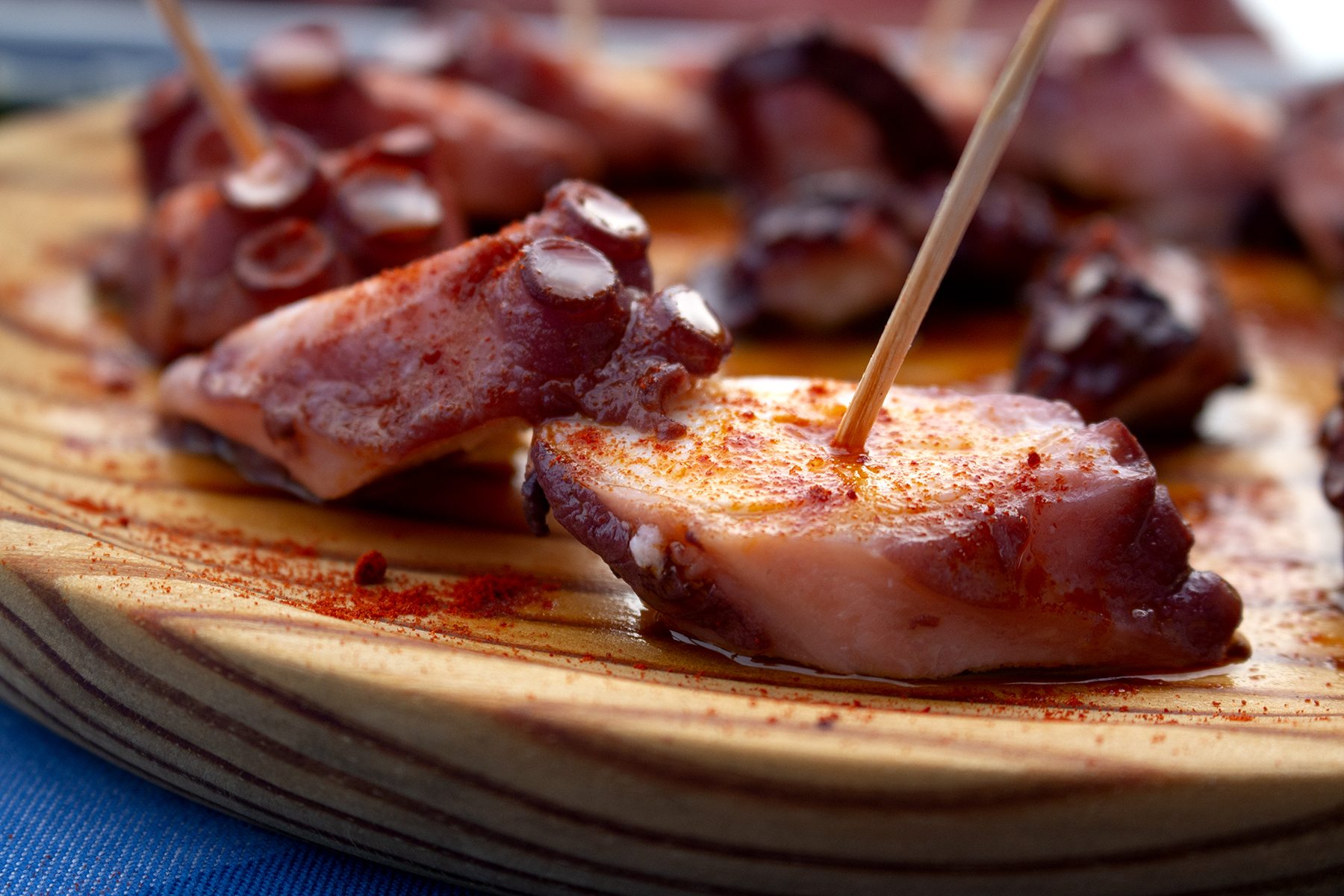
Five centuries
of Galician cooking.
More than five centuries ago, monks at the monastery of O Carballiño began serving pulpo á feira to visitors to the weekly market. Since then, festivals and kitchens throughout Galicia have celebrated this octopus dish as a symbol of regional identity.
Today, this heritage reaches kitchens across Europe under a name that highlights its origin: Wild Octopus. Wild Galician octopus, caught in the cold Atlantic rías using traditional pots and processed locally for professional kitchens.
- Species
Octopus vulgaris - Origin
Galician rías · Galicia - Fishing method
Traditional clay pots · checked daily - Colour
Deep crimson skin · cephalin pigment - Presentation
Rapidly chilled at source · ready to reheat - Market
B2B · Restaurants · Delicatessens in the Netherlands
What makes it different
Why does Wild Octopus
stand out from other octopus?
Wild habitat
A distinctive diet and
natural pigmentation
The cold currents of Galicia's rías, rich in oxygen and plankton, lead Octopus vulgaris to feed on velvet crabs, clams and mussels among granite crevices. Its natural cephalin pigment gives the skin a deep wine-red colour, alongside a distinctive sweet, mineral flavour.
Traditional fishing
Clay pots,
checked daily
Small boats set traditional clay pots and check them every day, returning undersized octopus to the sea. This method avoids the stresses of trawling, helps preserve the tentacles' tender, firm texture and is recognised by European authorities for sustainability.
Professional kitchens
Less preparation,
smoother service
The octopus is prepared at source: cooked following the traditional Galician method and rapidly chilled at a controlled temperature. In your kitchen it only needs brief reheating. Consistent texture in every batch, with a predictable cooking point.
Selling points for professional buyers
What makes the difference
in a B2B negotiation.
Product specifications
Everything you need to know
before adding it to your menu.
Origin
Octopus vulgaris caught in the Galician rías using traditional clay pots checked daily. Cold Atlantic waters rich in oxygen and plankton.
- Species: Octopus vulgaris, crimson skin
- Area: Rías Baixas and the Arousa, Vigo and Pontevedra rías
- Method: traditional pots · no trawling · checked daily
- Main season: February to November
- Minimum size: 1 kg cleaned · mature specimens
In the kitchen
The product arrives ready to reheat. All you need is controlled heat and careful presentation.
- Reheat in hot water or steam to an internal temperature of 70°C
- Suggested reheating time: 4–6 minutes
- Also suitable for a griddle or grill over medium-high heat
- Serve immediately · avoid repeated temperature changes
- Suggested pairing: La Vera paprika, extra virgin olive oil, coarse salt
For chefs
Practical advantages for day-to-day professional kitchen operations.
- Consistent texture in every batch · no surprises
- Less preparation · more control during service
- Predictable doneness · premium presentation
- Full traceability information for menus or inspections
- Ideal for seasonal menus · a product with a story
Origin comparison
Not all octopus is the same. Origin influences flavour, texture and the finished dish.
- Galicia (Wild Octopus): pots · cold waters · sweet, mineral flavour
- Morocco: trawling · warm waters · softer texture
- Bay of Biscay: mixed fishing methods · less consistent results
- Southeast Asia: imported · no EU traceability
Origin makes the difference
Origins compared on the plate
| Origin | Fishing method | Appearance on the plate | Flavour |
|---|---|---|---|
| Wild Octopus (Galicia) | Traditional pots · checked daily · cold waters | Deep crimson skin · minimal liquid loss | Sweet, mineral flavour · Atlantic character |
| French octopus (Bay of Biscay) | Traditional pots and trawling | Paler colour · uneven texture | Less pronounced |
| Moroccan octopus (Atlantic Sahara) | Large trawlers · temperate waters | Higher water content | Neutral flavour · more free water |
5
minutes
Kitchen Ready
Ready for your kitchen.
Faster service.
After arriving at the fish market, the octopus is cooked following the traditional Galician recipe and rapidly chilled at a controlled temperature. In your kitchen, brief reheating is all it needs.
Less preparation. More control during service. More consistent texture and doneness from one batch to the next. A practical reason for any head chef to choose it.
B2B Distribution · Netherlands
Shall we bring it
to your kitchen?
Wild Octopus for restaurants and delicatessens in the Netherlands. Delivery within 48–72 hours may be possible. B2B invoicing. Full traceability and sustainability documentation.
 Español
 English (UK)
 Nederlands